

How Does Intelligent Manufacturing Improve Fiber Optic Product Quality?
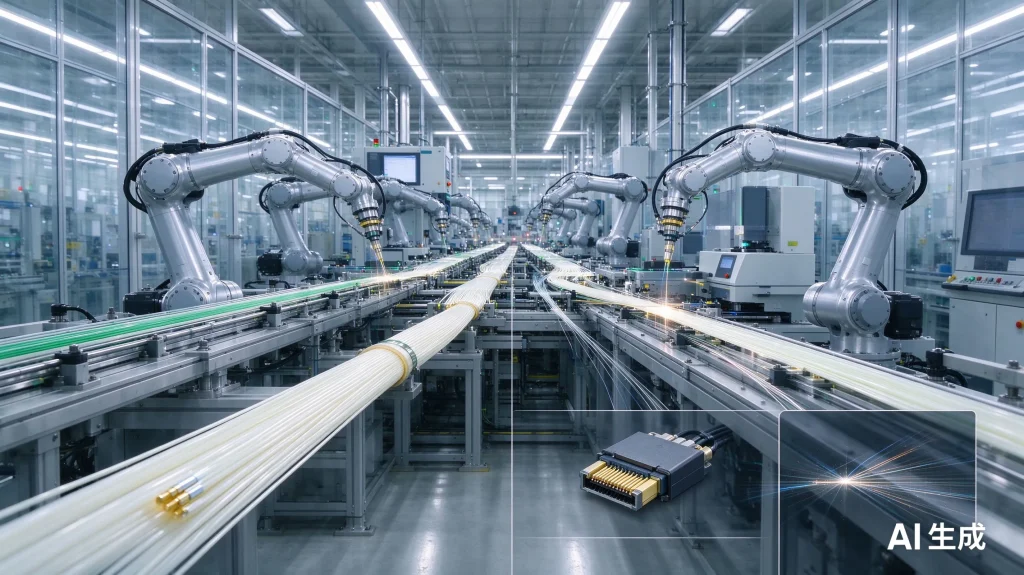
Short answer: Intelligent manufacturing improves fiber optic product quality by combining automated assembly, standardized workflows, and advanced inspection systems in a controlled production environment, which reduces human variation, increases repeatability, and helps ensure consistent connector performance across high-density optical communication products. ADTEK applies this model at its ShenShan manufacturing facility, which provides over 18,000 square meters of production space and is purpose-built to support AI data center infrastructure and high-speed network deployments.
What Intelligent Manufacturing Means for Optical Communication
For optical communication, where sub-micron alignment and end-face condition directly determine link performance, manufacturing consistency is not just a production goal—it is a technical requirement. Intelligent manufacturing translates into four practical capabilities: intelligent production lines, automated assembly, standardized manufacturing workflows, and advanced inspection and quality control systems. Together, these capabilities reduce the risk of defects that lead to fiber optic attenuation and insertion loss in deployed networks.
ADTEK’s ShenShan factory represents this approach in action. The seven-story standalone facility replaced a previous site with a comprehensive upgrade in intelligent manufacturing systems, automation and production efficiency, quality control processes, and global delivery capability. The facility is specifically designed to support growing demand for optical communication solutions in AI data centers and next-generation network infrastructure.
From Capacity Expansion to Manufacturing Transformation
During the ShenShan launch ceremony, ADTEK leadership emphasized that the relocation represents a strategic shift from simple capacity expansion to full manufacturing capability upgrade. Key priorities include advancing smart manufacturing technologies, strengthening R&D and production integration, and improving product quality and consistency. This transformation aligns with ADTEK’s vision to become a leading provider of fiber optic connectivity solutions in global markets.
The practical result is a production environment where standardized workflows reduce process variation, and where automation supports the repeatable assembly required by high-fiber-count products. These capabilities directly matter for products such as MTP/MPO assemblies, where multiple fibers must be aligned and polished consistently across every unit.
Core Capabilities Behind Reliable Fiber Optic Products
Visitors to the new facility observed a highly structured and automated production environment, including smart production lines, standardized manufacturing workflows, and advanced inspection systems. Core product manufacturing capabilities include high-fiber-count assemblies, standard fiber patch cords, and precision sheet metal components.
The ShenShan facility serves as a key manufacturing base for a wide range of optical communication products, including optical distribution frames (ODF), MPO/MTP fiber solutions, MMC fiber connectivity, outdoor and waterproof connectivity products, and optical communication sheet metal components. With improved automation and increased capacity, the factory is well positioned to support global demand across data centers, telecom networks, and broadband infrastructure projects.
How Manufacturing Quality Affects Link Performance
Quality at the manufacturing stage shows up directly in field performance. Consistent polishing and end-face geometry, for example, preserve physical contact in fiber connector ferrules, which is essential for keeping return loss and insertion loss within specification. Repeatable assembly processes also matter for trunk fiber patch cords and breakout configurations used in high-density data center links.
When fiber runs are planned, the quality of manufactured components affects fiber strand count calculations for AI racks and the overall reliability of the physical layer. Similarly, fiber patch cord selection depends on knowing that the manufacturing process can hold tight tolerances across large volumes—a capability that intelligent manufacturing is designed to provide.
Consistent manufacturing also supports compliance with recognized industry frameworks such as ISO quality management systems, and component design that follows IEC fiber optic connector standards, helping customers deploy optical products with confidence.
Supporting AI Data Center and Network Demand
Beyond internal development, the new factory contributes to the broader optical communication ecosystem. By strengthening intelligent manufacturing capabilities, ADTEK continues to support regional industrial development, improve supply chain resilience, and enhance production flexibility for global customers. These efforts reinforce ADTEK’s role in delivering stable and scalable data center connectivity solutions.
As demand for high-speed connectivity continues to grow, ADTEK remains committed to delivering reliable, scalable, and future-ready solutions through advanced infrastructure, optimized processes, and a strong technical foundation.
FAQ
What products are manufactured at ADTEK’s ShenShan facility?
The ShenShan facility manufactures high-fiber-count assemblies, standard fiber patch cords, and precision sheet metal components, as well as optical distribution frames, MPO/MTP fiber solutions, MMC fiber connectivity, and outdoor waterproof connectivity products.
How does intelligent manufacturing reduce fiber optic quality problems?
Automated assembly and standardized workflows reduce human variation, while advanced inspection and quality control systems catch defects before products ship. This improves consistency in connector end-face quality and reduces the risk of attenuation and insertion loss in deployed links.
Why is manufacturing consistency important for high-density fiber products?
High-density products such as MPO/MTP assemblies and MMC panels require multiple fibers to be aligned and terminated consistently across every unit. Manufacturing consistency ensures predictable performance and simplifies troubleshooting in data center deployments.
How does the ShenShan factory support AI data center growth?
The factory was designed with intelligent manufacturing systems, automation, and quality control processes specifically to support the growing demand for AI data center infrastructure and high-speed network deployments, strengthening global delivery capability.