

Short answer
To choose a DWDM multiplexer module, match four things: the number of channels you need (6, 12, 18, 40, or 64), the filter technology (TFF for low channel counts, AWG for 40-channel and above), the wavelength grid (100 GHz or 200 GHz spacing in the 1520–1600 nm band), and the package form factor (ABS box, LGX/MDC cassette, or 1U/19-inch rackmount). Confirm insertion loss, isolation, and connector type against your link budget before purchase, and pair the mux/demux with compatible patch cords and pigtails for a clean optical path.
Why DWDM Multiplexer Selection Matters
DWDM (dense wavelength division multiplexing) lets one fiber pair carry dozens of wavelengths, turning existing fiber plants into high-capacity trunks without pulling new cable. The multiplexer is the passive device that combines and separates those wavelengths, so its channel count, loss, and isolation directly decide how many 100G or 200G links your network can carry and how far they can reach. Selecting the wrong module usually means rework: wasted rack space, higher-than-planned insertion loss, or wavelengths that cannot be separated cleanly.
Step 1: Choose the Channel Count and Wavelength Grid
Start with how many wavelengths your application needs. The ITU-T G.694.1 recommendation defines the DWDM frequency grid that most multiplexers follow, so confirm your transceivers and mux/demux share the same grid before ordering. ADTEK covers the common range:
- 1×6, 1×12, and 1×18 port configurations in the 100G DWDM ABS box modules, built on TFF (thin film filter) technology with 20 nm channel spacing.
- 40-channel modules such as the 100G 40CH DWDM MDC module, based on AWG (arrayed waveguide grating) technology across the ITU 100 GHz grid (192.1–196.0 THz, roughly 1520–1600 nm).
- High-density rackmount platforms like the 1U 19-inch 64-channel DWDM rackmount, which supports 8 to 288 fiber cores with multiple MT ferrule options (Base-8, Base-16, Base-24).
If your node only needs a few wavelengths, a compact TFF module is usually the most economical choice; if you are scaling toward 40 or more channels, AWG-based modules and rackmount units amortize cost per wavelength better.
Step 2: Compare TFF and AWG Filter Technologies
TFF modules use cascaded thin film filters. They deliver very low insertion loss, high isolation, and excellent stability at channel counts up to about 18, which is why ADTEK uses TFF for the 150G DWDM modules and 200G DWDM modules in ABS box packages. AWG modules, by contrast, multiplex many wavelengths in one integrated waveguide chip, making them the practical choice for 40-channel DWDM grids where TFF cascades would accumulate too much loss.
For long-haul and metro core nodes, low loss is critical. The long-distance low-loss MDC DWDM module is designed exactly for this role, keeping signal integrity over high-capacity trunk networks and large-capacity metro core nodes.
Step 3: Match the Package to the Deployment Area
Package form factor follows deployment area:
- ABS box modules mount in splice closures and small node enclosures, ideal for outdoor trunk points. See the CWDM multiplexer modules in the same family for lower-density coarse grids, and the 8-channel CWDM ABS box for compact 1270–1610 nm builds.
- MDC/LGX cassettes fit standard LGX shelves and patch panels in equipment rooms; the 40CH 100G DWDM MDC module is a drop-in example with MDC/UPC assemblies.
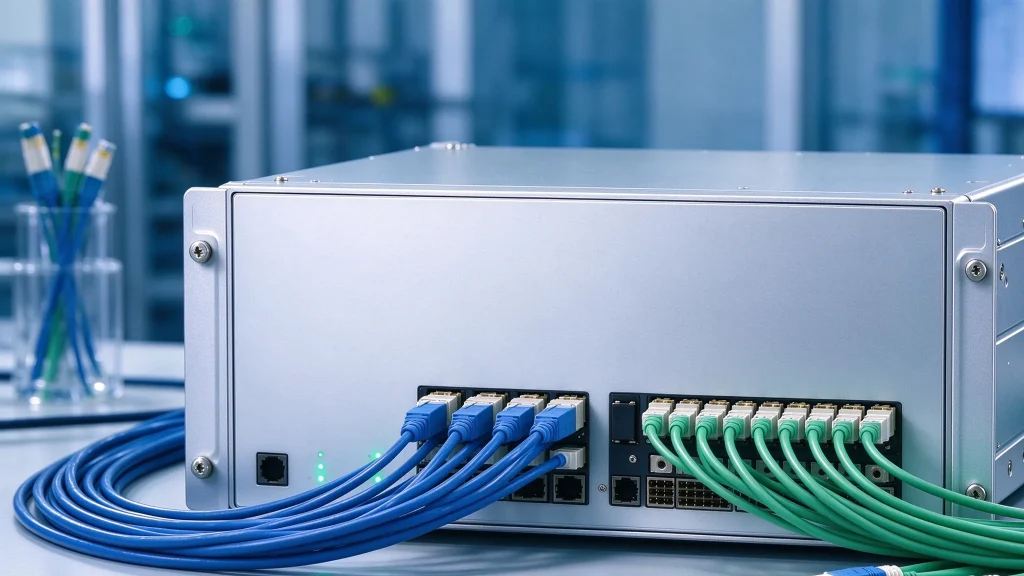
- 1U/19-inch rackmount platforms consolidate high channel counts in one rack unit, with options for different fiber modes and MT ferrule arrangements for data center and POP deployments.
For ultra-compact spaces such as 5G base stations and multi-channel CWDM networks, ADTEK also offers 12-channel CCWDM mini WDMs, which shrink package size without sacrificing isolation or stability.
Step 4: Verify Loss, Isolation, and Connector Compatibility
Insertion loss consumes link budget. Typical ADTEK DWDM modules hold channel insertion loss around 2.0–3.5 dB, adjacent channel isolation at 30 dB or higher, non-adjacent isolation at 40 dB or higher, and polarization dependent loss at 0.2 dB or lower. Before selecting a module, calculate your total link budget using our fiber optic attenuation guide, then confirm the connector and adapter type matches your existing fiber pigtails and patch cords. For higher-rate systems, review the 800G optical module selection guide to see how the physical layer choices align with transceiver reach classes. ADTEK validates its passive modules against Telcordia GR-1209 and GR-1221 reliability expectations with RoHS-6 compliant materials, and recommends checking applicable IEC passive component standards for your deployment.
DWDM Multiplexer Selection Checklist
- Count the wavelengths your node must carry today and in the next refresh cycle.
- Choose TFF for up to 18 channels; move to AWG for 40 channels and above.
- Confirm the ITU grid and channel spacing (100 GHz vs 200 GHz, 1520–1620 nm band).
- Add insertion loss and connector loss into your link budget before finalizing.
- Pick the package (ABS box, MDC cassette, or rackmount) that fits the deployment area.
- Verify isolation, return loss, and operating temperature range against network conditions.
Frequently Asked Questions
What is the difference between TFF and AWG DWDM modules?
TFF modules cascade thin film filters and offer low loss and high isolation at low channel counts (up to about 18). AWG modules use an integrated waveguide chip and are the practical choice for 40-channel and higher DWDM grids, where TFF cascades would accumulate excessive loss.
How many channels can a DWDM multiplexer support?
ADTEK DWDM modules cover 6, 12, 18, 40, and 64 channels, from ABS box modules and MDC cassettes up to 1U 19-inch rackmount platforms supporting 8 to 288 fiber cores depending on the fiber structure.
What channel spacing should I use: 100 GHz or 200 GHz?
Choose based on your transceivers and the ITU grid you operate. ADTEK rackmount DWDM units support both 100 GHz and 200 GHz intervals in the 1520–1600 nm range; 100 GHz grids carry more channels per band, while 200 GHz spacing gives wider passband tolerance.
Does DWDM require special fiber or connectors?
DWDM runs on standard single-mode fiber. Connectors must match your mux ports and patch panels (LC, SC, MDC, or MT ferrule variants). Keep insertion loss low and follow polarity rules, especially in high-density MPO environments.
Can I use a DWDM module for CWDM wavelengths?
No. DWDM modules are tuned to the ITU dense grid around 1520–1620 nm, while CWDM modules cover the coarse 1270–1610 nm range with much wider spacing. Select the family that matches your transceiver wavelengths.