

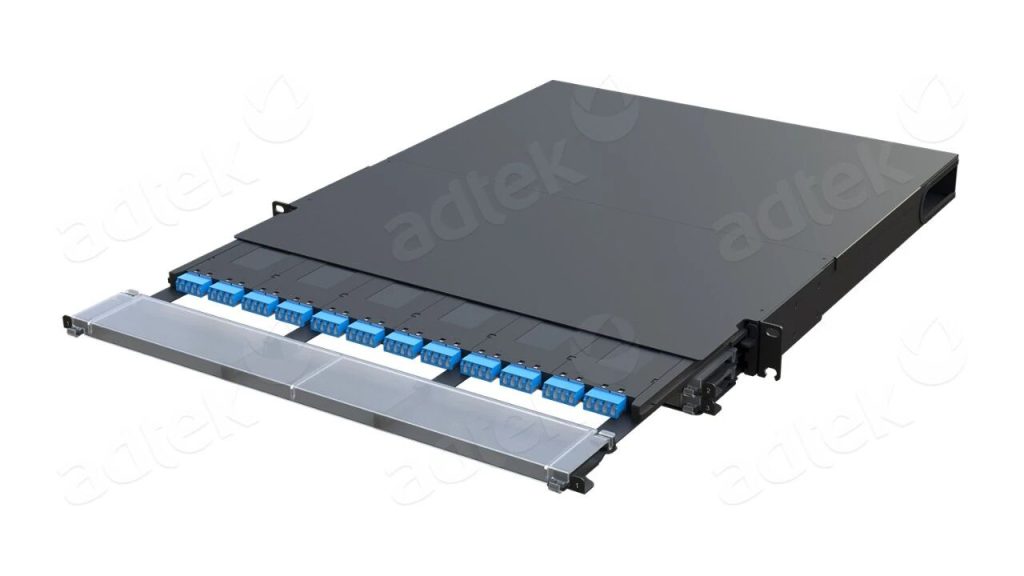
As data centers evolve to support AI workloads and increasingly demanding network architectures, fiber infrastructure must do more than deliver high-density connectivity. It also needs to be easy to deploy, adapt, and maintain.
Traditional modular fiber patch panels can make these tasks more complicated than they need to be. Rail-based mounting mechanisms, limited access, and rigid module configurations can turn routine upgrades into time-consuming maintenance operations, particularly in densely populated racks.
ADTEK’s GPX80 CíSnap™ Magnetic Modular Fiber Patch Panel takes a different approach. Designed around a tool-free magnetic locking mechanism, it simplifies module installation and replacement while offering front and rear access and flexible support for different fiber connector types and port densities.
The result is a more adaptable fiber distribution platform designed to meet the practical demands of modern data centers.
Installing or replacing a fiber module should not require a complicated mechanical process.
Unlike conventional designs that rely on sliding rails and screws, GPX80 CíSnap™ uses a T-slot alignment structure combined with magnetic locking.
Simply slide the module into its designated position. The T-slot guides it into alignment, while the magnetic mechanism engages automatically to secure it in place. When removal is needed, lift the module to release the lock.
No screws. No additional tools. No complicated installation steps.
This straightforward mechanism simplifies module handling and makes routine configuration changes easier, especially in environments where fiber distribution layouts need to be adjusted frequently.
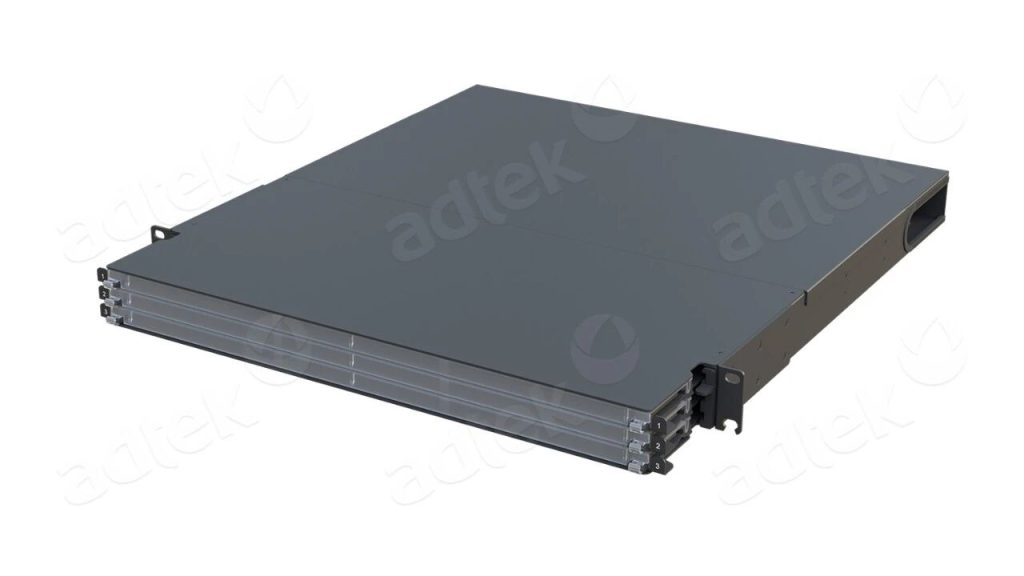
Access to equipment is often limited in high-density data center environments. Once front-side fiber patching is in place, adding or replacing modules from the front can become difficult without disturbing existing cable connections.
GPX80 CíSnap™ addresses this challenge with front and rear module installation.
Modules can be installed from either side of the panel, allowing engineers to choose the most practical access point based on rack layout and installation conditions.
For example, additional modules can be installed from the rear when front-side patch cords are already connected. Routine access and module replacement can also be performed from the front, depending on the maintenance requirements.
This dual-access design provides greater flexibility during initial deployment, capacity expansion, and ongoing maintenance, helping reduce unnecessary interference with existing fiber connections.
Data center infrastructure rarely transitions from one connectivity standard to another overnight. Legacy equipment and next-generation platforms often operate side by side, creating a need for fiber distribution systems that can accommodate different interfaces and connection densities.
GPX80 CíSnap™ supports a range of adapter configurations, including LC and MPO/MTP®, with modules available in different port counts.
Different module types and densities can be combined within the same tray, allowing network operators to accommodate both conventional duplex connections and high-density fiber trunk connections in one platform.
The system also supports straight-through and breakout configurations. Each module’s polarity is verified at the factory and integrated into the module assembly, helping simplify deployment and reduce configuration-related errors.
Whether expanding an existing LC-based network or introducing MPO/MTP® connectivity for new AI infrastructure, GPX80 provides the flexibility to support phased network upgrades without requiring a complete redesign of the existing distribution system.
In a fully populated fiber distribution panel, even a small maintenance task can become unnecessarily disruptive if multiple components need to be removed to access a single module.
GPX80 CíSnap™ is designed to keep maintenance localized.
Each module features an independent locking mechanism, allowing it to be installed, removed, or replaced without dismantling the entire tray or disturbing adjacent modules.
This modular approach offers several practical benefits:
Simplified maintenance: Access and replace only the module that requires attention.
Reduced cable disturbance: Keep neighboring connections and existing cable arrangements in place.
Flexible upgrades: Add or change module configurations as network requirements evolve.
Improved serviceability: Reduce the scope of routine maintenance operations.
For operational data centers, minimizing unnecessary handling of existing fiber connections is an important consideration. GPX80 helps make module-level maintenance more straightforward and controlled.
Beyond its modular architecture, GPX80 CíSnap™ incorporates several features designed to support efficient day-to-day operation.
The chassis uses permanent tray numbering to make module locations easier to identify. Each module also includes a snap-in identification block and an integrated labeling area, allowing operators to apply their own labeling conventions and network management practices.
This eliminates the need for additional customized part numbers simply to accommodate different identification requirements.
Combined with its flexible adapter configurations and independent module design, these features help make fiber connections easier to organize, identify, and maintain throughout the system’s service life.
GPX80 CíSnap™ is designed to support different deployment requirements across modern fiber infrastructure.
Hyperscale and AI Data Centers
As data center capacity expands, new backbone connections may need to be added to racks where existing fiber infrastructure is already fully deployed.
The rear-access installation option allows engineers to introduce additional modules without necessarily disturbing front-side patching arrangements. This can simplify expansion work and help minimize disruption to existing connections, subject to site-specific access and maintenance procedures.
Mixed-Generation Network Environments
For operators transitioning toward higher-density connectivity, GPX80 supports the coexistence of different interface types within the same tray.
Existing LC duplex connections can remain in service while new MPO/MTP® trunk connections are introduced. This supports a phased migration strategy, allowing infrastructure upgrades to follow actual capacity requirements rather than forcing premature replacement of existing equipment.
OEMs and System Integrators
The T-slot alignment and magnetic locking architecture provides an alternative to conventional proprietary sliding-rail mechanisms used in modular fiber distribution systems.
For OEMs and system integrators, this offers another approach to equipment design and product integration, with greater flexibility in how modular fiber distribution is incorporated into their systems.
Reliable connectivity starts with sound product design and adherence to relevant industry requirements.
GPX80 CíSnap™ references the following standards and compliance requirements:
TIA-568-C.3
TIA-604-5
IEC 61754-7 and IEC 61754-20
GR-1435
UL 94 V-0
RoHS
REACH
IEC 61249-2-21
These specifications address relevant areas of fiber connectivity, component interfaces, material performance, and environmental compliance.
As data center networks become denser and more complex, the physical infrastructure supporting them must evolve as well.
GPX80 CíSnap™ brings together tool-free magnetic installation, front and rear module access, flexible LC and MPO/MTP® configurations, and independent module replacement in a single modular fiber distribution platform.
Rather than adding complexity to an already demanding environment, it focuses on making everyday installation, expansion, and maintenance more manageable.
ADTEK — Making Fiber Connectivity Simpler.