
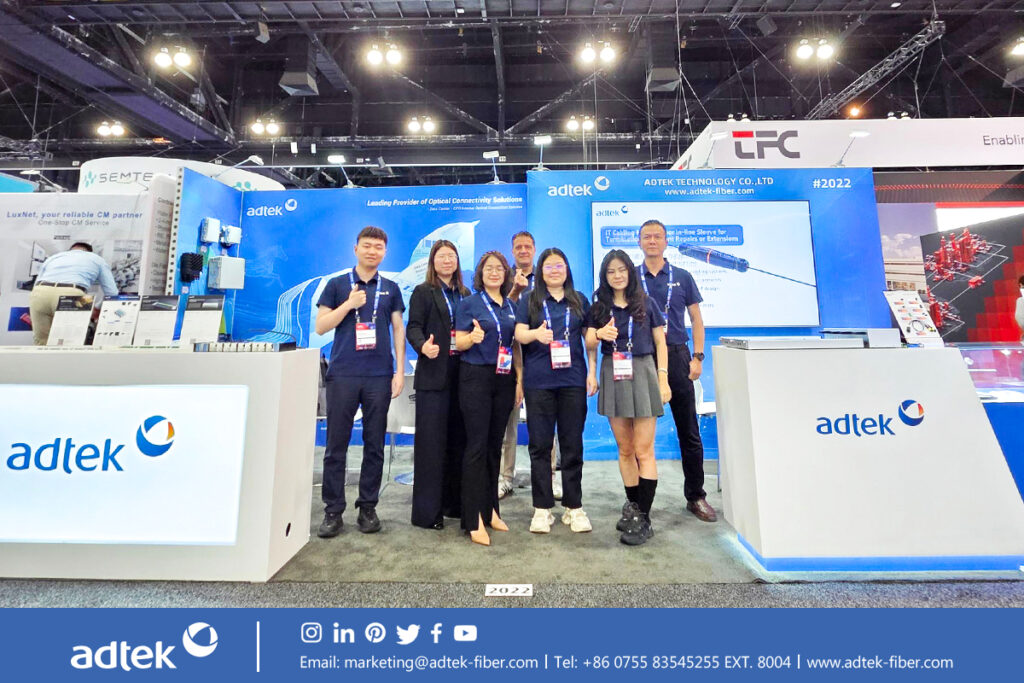
OFC 2026 has officially come to a close. Over the past few days, we had the opportunity to connect with industry partners, customers, and innovators from around the world. We would like to extend our sincere thanks to all the visitors, partners, and long-term supporters who stopped by our booth. Your trust and engagement continue to drive us forward.
This year’s OFC was not only a platform for showcasing technologies, but also a moment to reflect on where the industry is heading—especially as AI, high-performance computing, and next-generation network architectures reshape the role of optical connectivity.
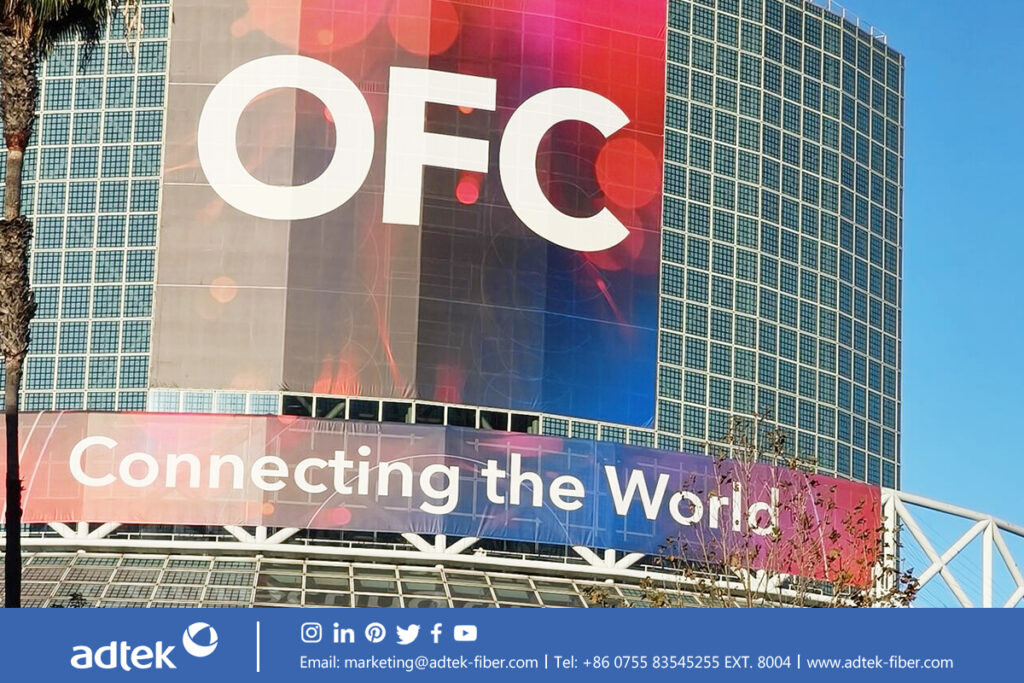
At this year’s exhibition, our focus was clear: solving real infrastructure challenges behind next-generation networks, from AI clusters to edge connectivity.
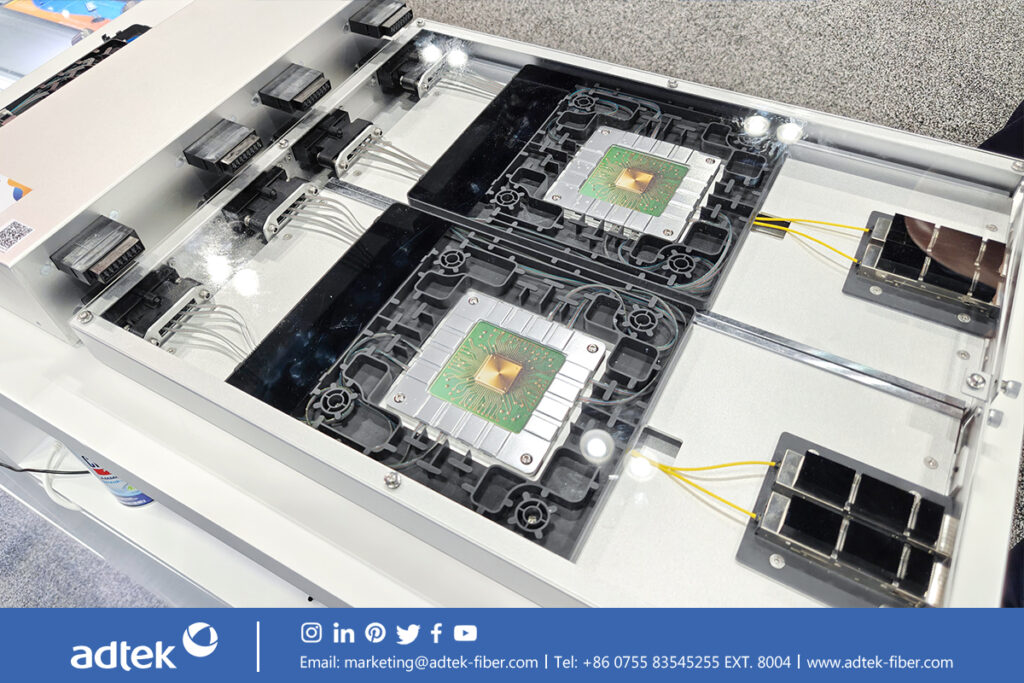
As AI systems scale rapidly, the balance between thermal management and fiber density has become one of the most critical challenges inside data centers.
At OFC, we presented high-density interconnect solutions designed for AI-driven environments, including:
1.6 mm VSFF sub-units for ultra-compact connectivity
Infinity 0G cassettes optimized for airflow and cable management
These designs deliver up to 70% airflow improvement, helping protect high-value 800G and 1.6T optical transceivers from overheating, while maintaining extreme port density.
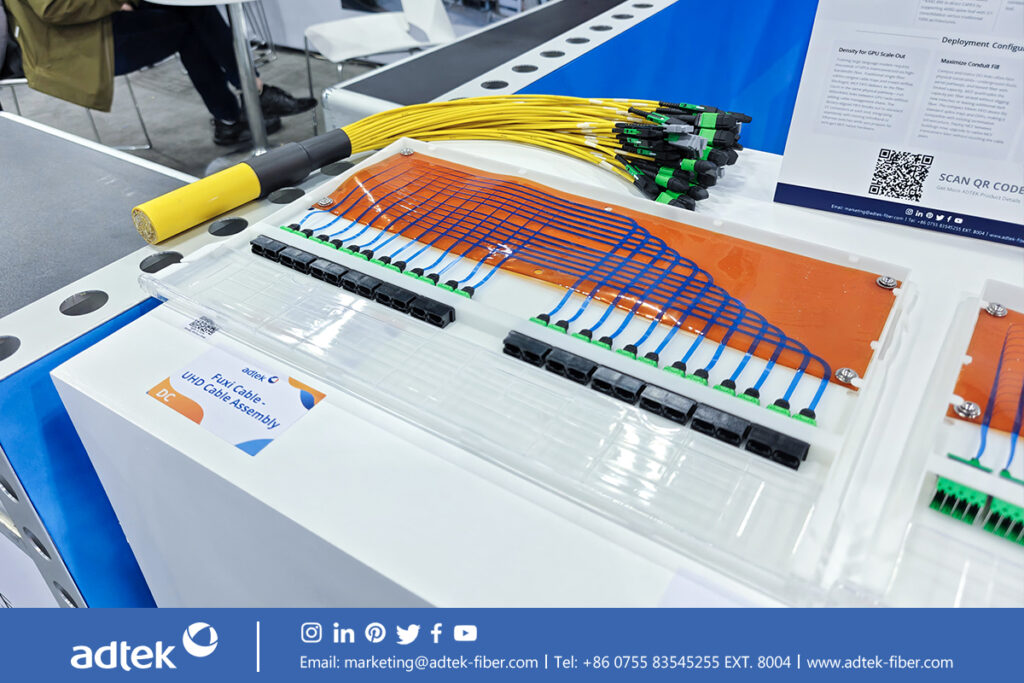
As data center interconnect (DCI) capacity continues to scale, fiber count is no longer measured in hundreds—but in thousands.
We showcased our ability to support ultra-high fiber count trunk solutions up to 6,912 fibers, addressing not just capacity, but also deployment agility.
Our Longma Braided Series demonstrates how high-count trunk assemblies can be delivered in significantly shorter lead times—reducing traditional industry delays and enabling faster network expansion.
While AI infrastructure continues to grow at the core, the connection to the end user remains just as critical.
Our FTTx and edge solutions presented at OFC focus on simplifying deployment and improving field efficiency:
Splice-at-the-van deployment model for flexible installation
Waterproof connectivity systems designed for harsh outdoor environments
These solutions ensure a seamless connection from AI-driven data centers to the network edge, bridging high-performance infrastructure with real-world deployment scenarios.
Beyond standard products, we highlighted our role as a precision connectorization partner.
Through our CFE (Customer-Focused Engineering) program, we support:
Custom fiber termination
Integration with high-performance connector platforms such as SN-MT, MMC, and MTP/MPO
Flexible design and manufacturing tailored to customer requirements
This approach enables customers to accelerate product development while maintaining performance and quality consistency.
One of the key themes at OFC 2026 was the growing importance of Optical Circuit Switching (OCS) in AI-driven network architectures.
With AI model sizes growing at an exponential rate, and compute clusters scaling to hundreds of thousands of GPUs, traditional network architectures are reaching their limits.
OCS is increasingly being considered as a core infrastructure component, especially for:
large-scale AI cluster interconnects
improving network resilience and fault tolerance
enabling flexible, software-defined topologies
While the potential of OCS is clear, several challenges remain before it can be widely adopted:
Port density limitations: Current systems are still far from the tens-of-thousands scale required
Switching speed vs. system response: Optical switching may operate in microseconds, but transceiver re-lock times still occur at millisecond scale
Insertion loss constraints: High-speed 800G+ links leave very limited optical budget
Manufacturing complexity: Scaling MEMS-based systems to thousands of ports requires extreme precision and reliability
At the same time, operational challenges such as fiber cleanliness and maintenance are becoming increasingly critical in high-density environments, directly impacting network performance and reliability.
OFC 2026 made one thing clear: the industry is entering a new phase where architecture, scalability, and operational efficiency matter as much as raw performance.
Technologies like CPO, OCS, and high-density optical interconnects are evolving rapidly, but their success will depend on how well they integrate into real-world systems—balancing performance, cost, manufacturability, and long-term reliability.
From the AI core to the network edge, optical connectivity is no longer just a supporting layer—it is becoming a defining factor in how future infrastructure is built.
OFC is always more than an exhibition. It is a place where ideas meet execution, and where partnerships shape the future.
We are grateful to everyone who visited us, shared insights, and explored collaboration opportunities. We look forward to continuing these conversations and building the next generation of optical connectivity together.